
Traditional Full-Spine Chiropractic Care
Hands-On Adjustments. Whole-Spine Care. Personalized Treatment.
From Your Neck to Your Lower Back — Helping You Move Better, Feel Better, and Get Back to Living.
Your spine plays an essential role in nearly everything you do. From turning your head and reaching overhead to bending, walking, and simply sitting comfortably, healthy spinal movement is an important part of everyday life.
When joints become stiff, muscles tighten, or movement patterns change, even simple daily activities can become uncomfortable.
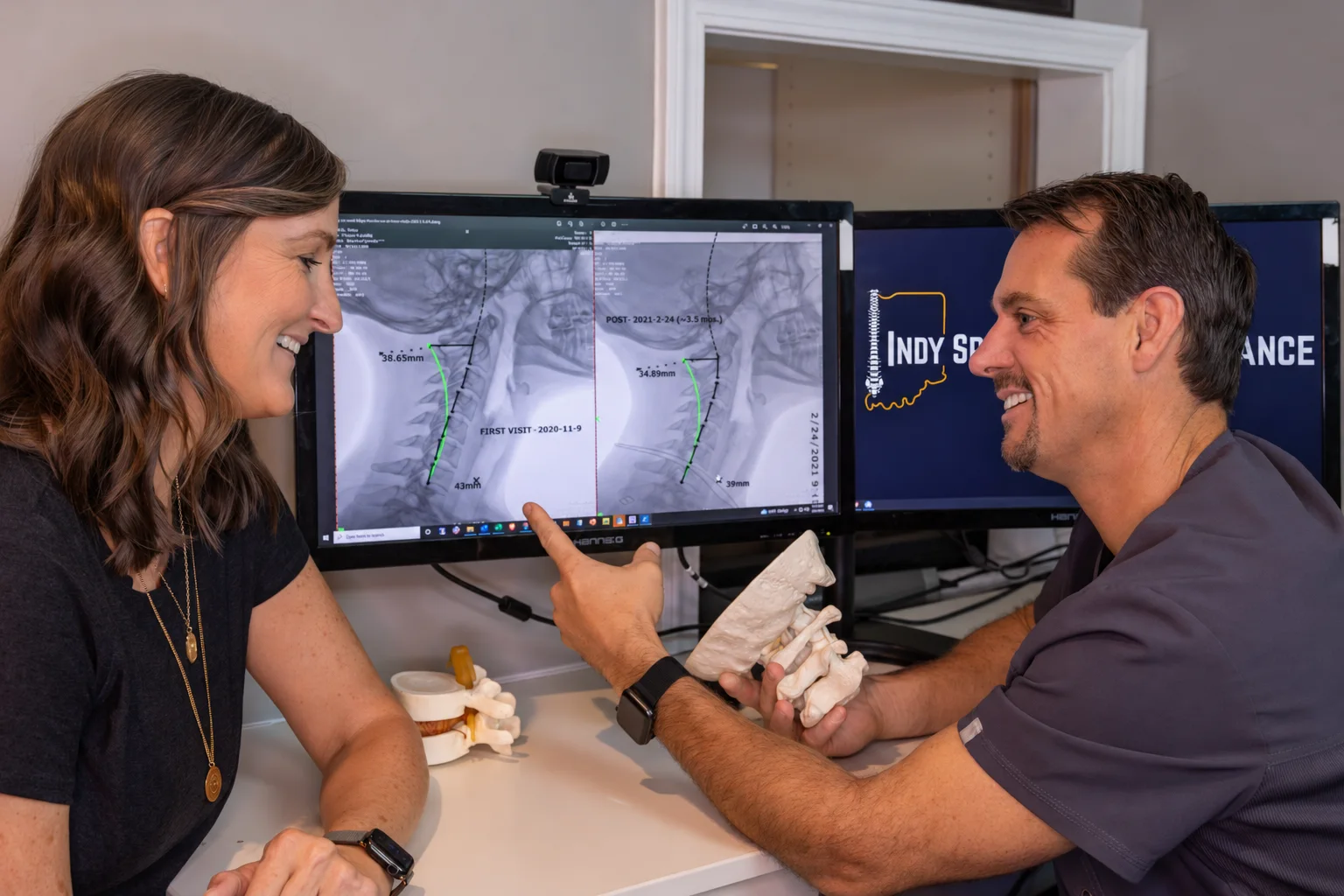
At Indy Spine and Balance, the doctor provides traditional, hands-on chiropractic care focused on improving spinal mobility, addressing musculoskeletal discomfort, and supporting better physical function.
While our practice is recognized for specialized upper cervical care and advanced technology, we also offer comprehensive chiropractic adjustments throughout the spine.
Because sometimes what your body needs is the skilled, hands-on approach of traditional chiropractic care.
What Is Traditional Full-Spine Chiropractic Care?
Treating More Than One Area. Understanding How the Spine Works Together.
Traditional chiropractic care involves using carefully directed manual techniques to assess and treat spinal joints that may be contributing to pain, stiffness, or restricted movement.
A chiropractic adjustment, also called spinal manipulation, involves applying a controlled force to a specific joint to help improve its movement and function.
The doctor evaluates the spine as a connected musculoskeletal system, recognizing that discomfort in one region may coexist with movement limitations or muscle tension in another.
Full-spine care may involve:
- Cervical Spine (Neck): Addressing selected joint restrictions, stiffness, and musculoskeletal discomfort affecting the neck.
- Thoracic Spine (Upper & Mid-Back): Supporting mobility through the upper and middle back, including areas associated with shoulder-blade tension and stiffness.
- Lumbar Spine (Lower Back): Addressing mechanical lower back pain and movement limitations that can interfere with daily activities.
- Pelvis & Sacroiliac Region: Evaluating joint-related discomfort and movement concerns involving the connection between the spine and pelvis.
Not every patient needs an adjustment in every region. Treatment is directed toward areas identified during your individual evaluation.
The Benefits of Traditional Chiropractic Care
Better Movement Starts With Understanding What's Limiting It.
Traditional chiropractic adjustments may offer several benefits for appropriately selected patients:
- Pain Relief: May help reduce certain types of neck, back, and joint-related musculoskeletal discomfort.
- Improved Spinal Mobility: Helps address restricted movement in selected spinal joints.
- Reduced Stiffness: May improve comfort in areas affected by mechanical joint restrictions.
- Greater Range of Motion: Can help make bending, turning, and everyday movements more comfortable.
- Improved Physical Function: May support your ability to perform daily tasks with less discomfort.
- A Non-Surgical Approach: Offers a conservative treatment option without surgery or injections.
- Individualized Treatment: Care is tailored to your examination findings, comfort level, and functional goals.
Your Spine Works as a Connected System
Where You Feel the Pain Isn't Always the Whole Story.
Your cervical, thoracic, and lumbar spine work together with your pelvis, muscles, ligaments, and surrounding joints to support movement.
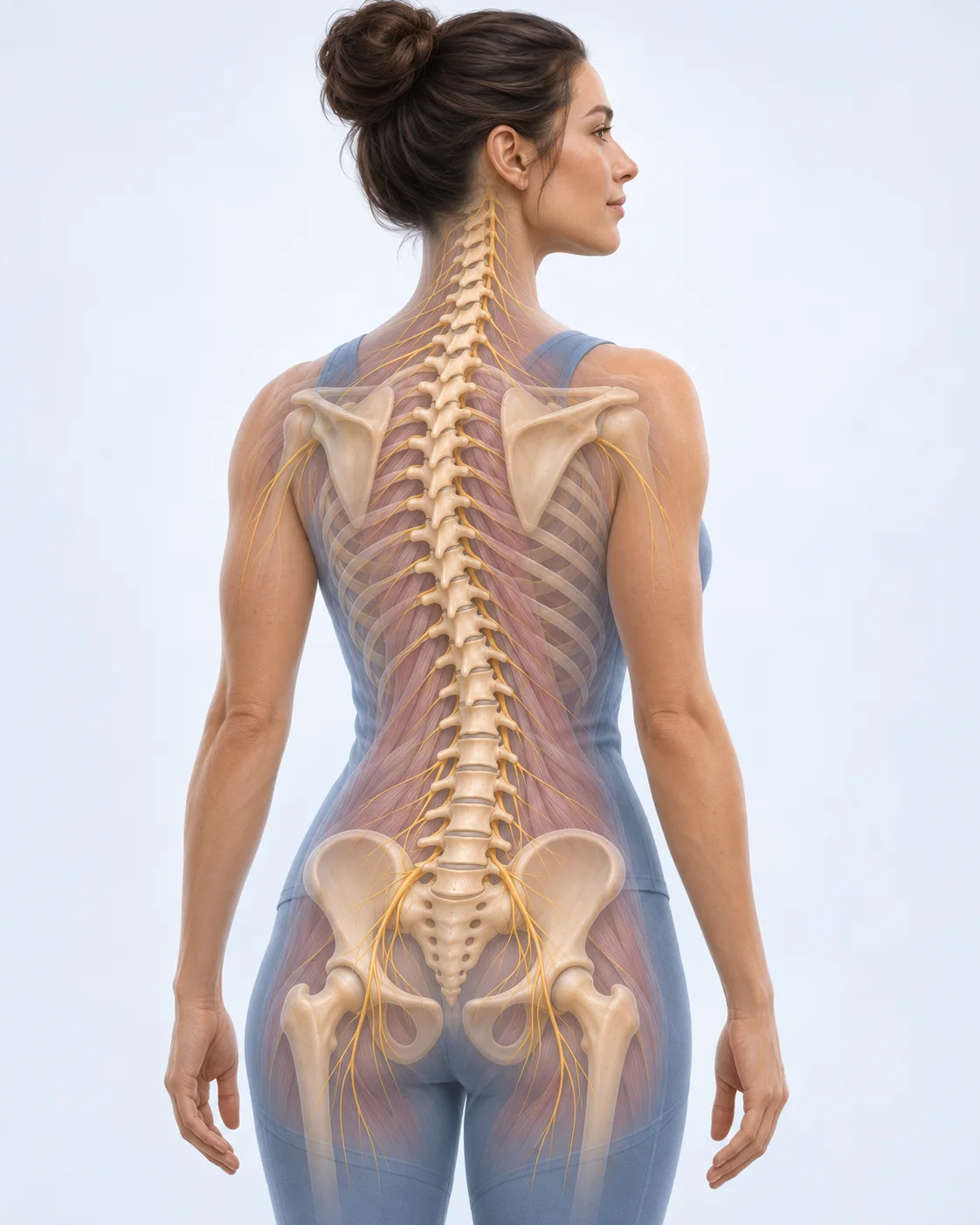
When one area becomes painful or restricted, you may begin changing the way you move to compensate.
For example:
- Stiffness in the upper back may affect how comfortably you move your shoulders and neck.
- Limited hip or pelvic mobility may contribute to altered movement patterns involving the lower back.
- Persistent muscle guarding may make normal spinal movements feel uncomfortable.
- Prolonged sitting, repetitive activities, or previous injuries may contribute to certain mechanical pain patterns.
The doctor considers these relationships during your evaluation instead of assuming that the area where you hurt is the only area that matters.
The goal is to understand the factors contributing to your discomfort and develop a plan that supports better movement and function.
What Conditions May Benefit from Full-Spine Chiropractic Care?
Depending on your health history, symptoms, and examination findings, traditional chiropractic adjustments may be considered for:
- Lower back pain
- Upper and mid-back discomfort
- Neck pain and stiffness
- Certain types of mechanical joint pain
- Restricted spinal movement
- Muscle tension associated with spinal discomfort
- Selected neck-related headaches
- Sacroiliac and pelvic-region discomfort
- Some sports- and activity-related musculoskeletal complaints
- Recurring stiffness related to everyday movement and physical demands
Chiropractic care is not appropriate for every condition, and some symptoms require additional medical evaluation before treatment.
What Happens During a Traditional Chiropractic Adjustment?
Skilled Hands. Controlled Movement. Care Tailored to You.
Following your evaluation, the doctor determines which joints or areas may benefit from manual chiropractic care.
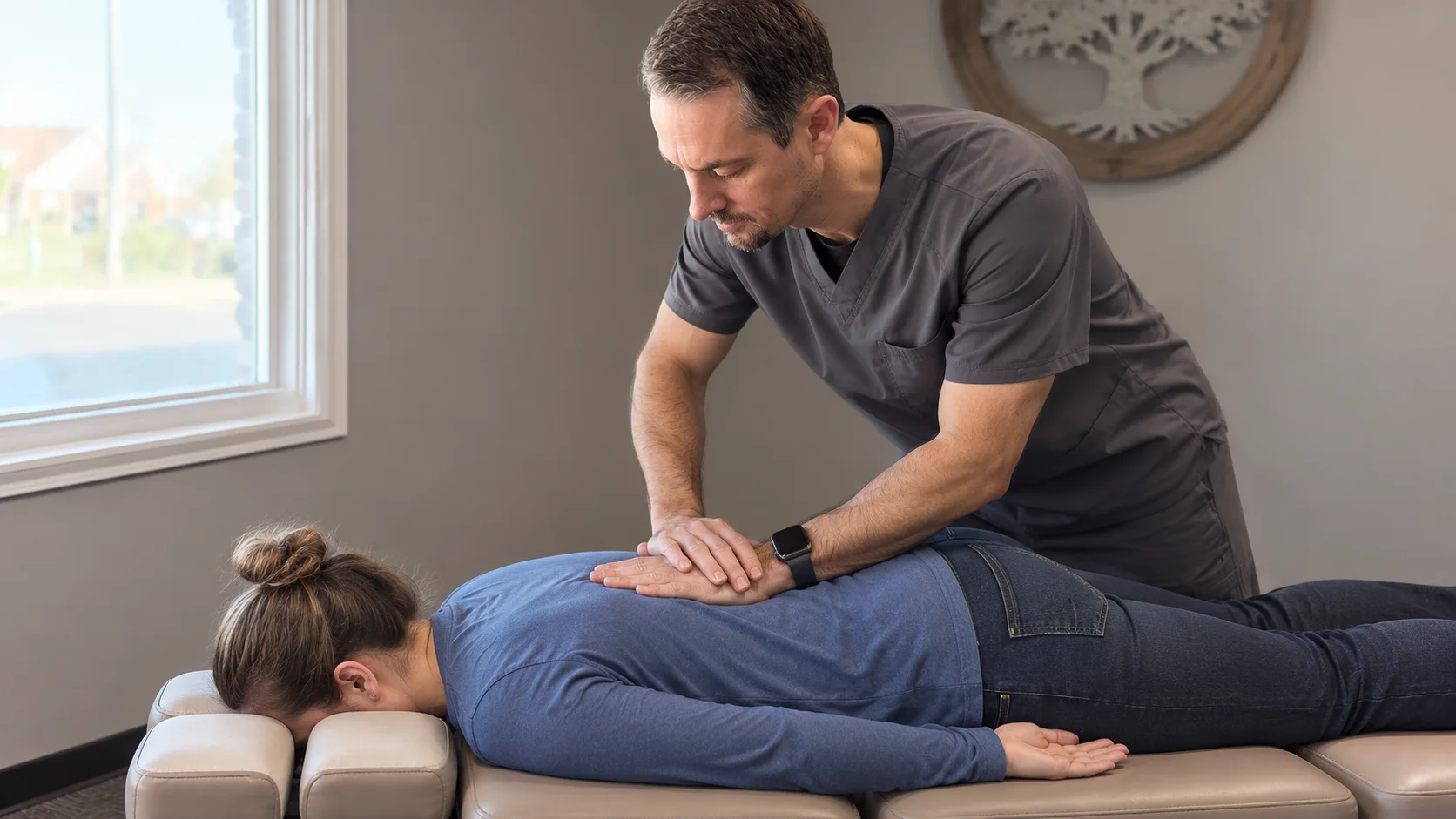
During an adjustment, they use a controlled, directed movement to address the selected joint.
Depending on the technique, you may hear a popping or cracking sound.
That sound is typically caused by changes in gas pressure within the joint—not bones cracking or breaking.
The sound itself is not necessary for an adjustment to be beneficial and does not indicate how successful a treatment has been.
Some patients experience improvements in comfort or movement following care, while others may experience temporary soreness or stiffness.
The doctor discusses your treatment options, comfort preferences, and response to care when developing your plan.
Traditional Adjustments or Gentle Instrument-Assisted Care?
Different Techniques. One Individualized Approach.
At Indy Spine and Balance, we recognize that patients have different needs and preferences.
Some patients prefer traditional, hands-on chiropractic adjustments. Others feel more comfortable with gentle, low-force or instrument-assisted techniques.
That's why the doctor offers several approaches to spinal care.
Traditional Full-Spine Chiropractic
Hands-on manual adjustments directed toward selected joints throughout the spine to address mechanical pain and mobility concerns.
ProAdjuster Computerized Chiropractic Care
Gentle, instrument-assisted adjustments using controlled mechanical impulses and computerized feedback without traditional forceful twisting.
NUCCA Upper Cervical Care
Specialized, gentle upper cervical adjustments emphasizing the relationship between the head, atlas, and uppermost cervical spine.
The right technique is the one that is appropriate for your condition—not simply the one used most often.
The doctor evaluates your findings, discusses your preferences, and recommends a treatment approach based on your individual needs.
More Than an Adjustment
Looking Beyond the Symptoms. Getting to the Root Cause.
At Indy Spine and Balance, your care is about more than a quick adjustment and sending you on your way.
The doctor considers your symptoms, previous injuries, movement limitations, posture, daily activities, and other relevant factors to better understand what may be contributing to your discomfort.
When appropriate, traditional chiropractic care may be combined with additional services, including:
- Class 2 & Class 4 Laser Therapy
- Shockwave Therapy
- Dry Needling
- Non-Surgical Spinal Decompression
- Movement and Rehabilitation Therapies
- Specialized Upper Cervical Care
These services may complement your chiropractic treatment when particular muscles, tendons, joints, or movement limitations require additional attention.
Our goal is to develop a thoughtful plan focused on your needs, rather than applying the same treatment to every patient.
Why Choose Indy Spine and Balance?
Traditional Hands-On Care. Advanced Options. Experience That Matters.
Serving the northeast Indianapolis community since 2004, the doctor combines traditional chiropractic techniques with specialized upper cervical training and advanced therapeutic technologies.
What sets our approach apart is the ability to consider multiple treatment options while keeping your individual needs at the center of care.
We emphasize:
- Comprehensive, evaluation-led chiropractic care
- Traditional hands-on adjustments throughout the spine
- Gentle alternatives for patients who prefer low-force techniques
- Attention to spinal movement and musculoskeletal function
- Personalized treatment recommendations
- Advanced technology when clinically appropriate
- Clear communication and consideration of patient comfort
You don't have to choose between traditional chiropractic care and modern treatment options. At Indy Spine and Balance, both are available when appropriate for your needs.
Frequently Asked Questions
Do you adjust the entire spine?
Yes. The doctor offers traditional chiropractic adjustments for the cervical, thoracic, and lumbar spine, as well as appropriate joint-related concerns involving the pelvis.
However, that doesn't mean every patient needs every area adjusted. Treatment depends on individual examination findings.
Do traditional chiropractic adjustments hurt?
Many patients tolerate adjustments well, although experiences vary. Some may experience temporary soreness, stiffness, or discomfort afterward.
The doctor can discuss different techniques and treatment options based on your comfort and condition.
Do I have to have my neck cracked?
No. If you prefer a gentler approach or if manual neck manipulation is not appropriate, the doctor can discuss alternatives, including ProAdjuster and specialized upper cervical techniques.
Is chiropractic care appropriate for everyone?
No. Certain medical conditions, injuries, fractures, spinal instability, or neurological findings may require special precautions or alternative care.
A comprehensive evaluation helps identify whether chiropractic treatment is appropriate. Although serious complications are rare, they can occur, particularly with cervical manipulation.
How many adjustments will I need?
There is no standard number of adjustments appropriate for everyone.
Your care recommendations depend on your condition, functional goals, examination findings, and response to treatment.
Ready to Move Better and Feel Better?
Traditional Chiropractic Care. Personalized for You.
Whether you're struggling with recurring back pain, neck stiffness, restricted movement, or everyday musculoskeletal discomfort, our goal is to help you understand your options and work toward improved function.
At Indy Spine and Balance, you'll find traditional chiropractic care backed by experience, individualized evaluation, and access to advanced therapeutic options.
Looking Beyond Symptoms. Getting to the Root Cause.