
Gentle, Precision-Focused Chiropractic Care for the Uppermost Region of Your Spine.
At the very top of your spine, just beneath your skull, sit two remarkable vertebrae: the atlas (C1) and axis (C2).
Although small, these structures play an important role in supporting your head, allowing movement, and protecting vital neurological structures.
At Indy Spine and Balance, the doctor specializes in evaluating this often-overlooked region of the spine through a precise, gentle approach to upper cervical chiropractic care.
Their philosophy is simple: Understanding how your body is functioning is just as important as understanding where you're experiencing pain.
Understanding Your Atlas & Axis
The Foundation of Head and Neck Movement
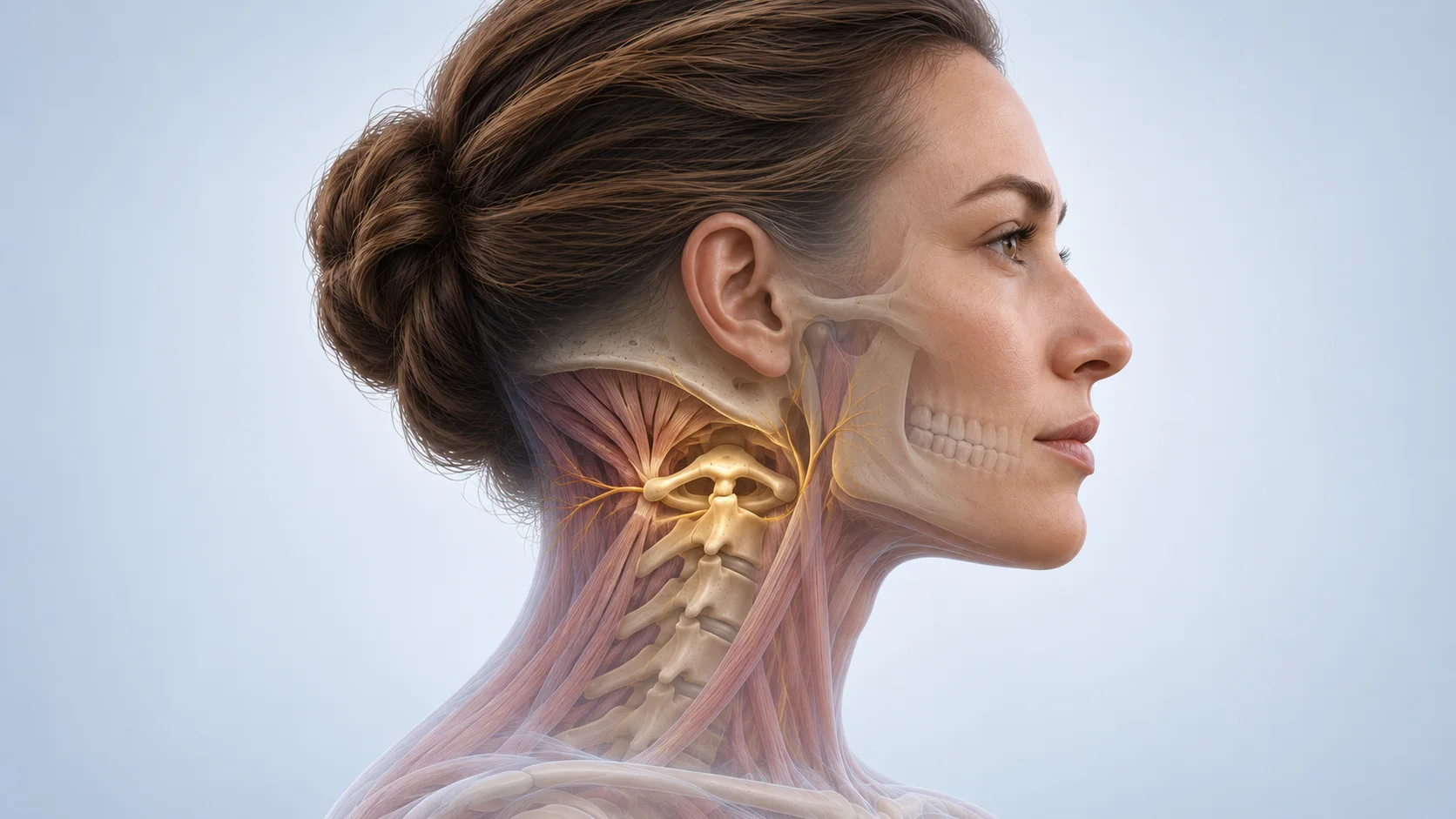
The upper cervical spine is unlike any other region of your back.
The Atlas (C1)
The atlas is the first cervical vertebra, positioned directly beneath the skull. Unlike most vertebrae, it has a distinctive ring-like structure that helps support the weight of your head.
Its relationship with the skull allows much of the nodding motion of your head.
The Axis (C2)
Located immediately beneath the atlas, the axis is the second cervical vertebra.
Together, these two vertebrae form a specialized joint that allows a significant portion of your head's side-to-side rotation.
The Brainstem & Upper Spinal Cord
The brainstem connects the brain to the spinal cord and helps regulate essential functions, including breathing, cardiovascular activity, and neurological communication.
The upper cervical vertebrae surround and protect the area where the brainstem transitions into the spinal cord.
This close anatomical relationship is one reason careful assessment of the upper cervical region is important.
Why Upper Cervical Alignment & Biomechanics Matter
Your Head, Neck & Body Work as a Connected System.
Your head must remain supported and balanced as you sit, stand, walk, and move.
The cervical spine, surrounding muscles, ligaments, and joints all contribute to that process.
When movement becomes restricted or painful, the body may begin making compensations to maintain comfort and function.
These compensations can sometimes contribute to:
- Persistent neck and shoulder tension
- Stiffness or restricted head movement
- Muscle fatigue and discomfort
- Changes in head position or posture
- Altered movement patterns
- Neck-related headaches
The relationship between cervical mechanics and symptoms is complex. Not every postural asymmetry or spinal variation causes pain, and careful examination is necessary to identify relevant contributing factors.
At Indy Spine and Balance, we look at the bigger picture rather than assuming that every symptom has the same cause.
What Is NUCCA Upper Cervical Care?
A Gentle, Precision-Focused Technique
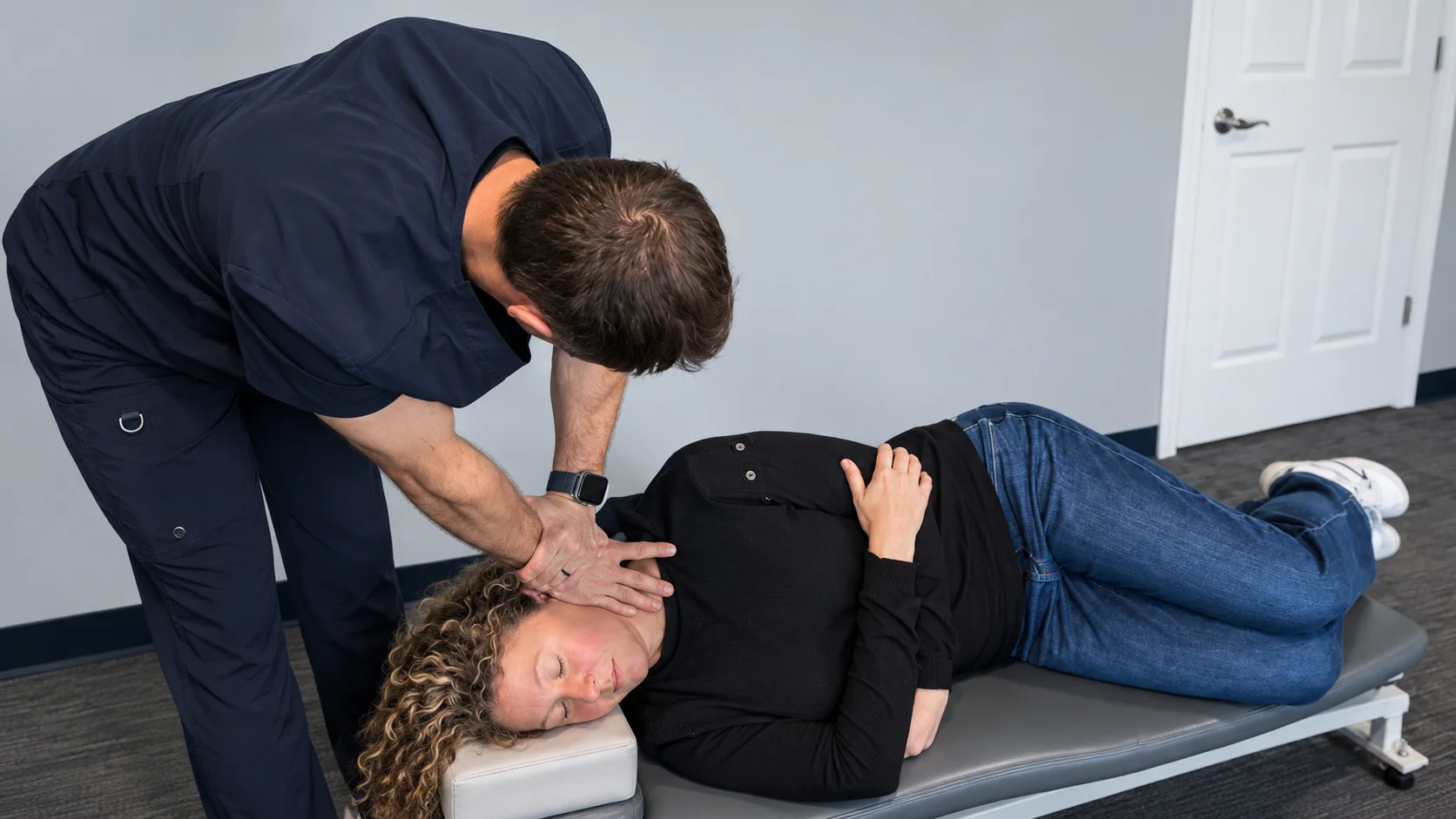
NUCCA stands for the National Upper Cervical Chiropractic Association.
It is a specialized chiropractic approach focused on evaluating the relationship between the head, atlas, and upper cervical spine.
Unlike traditional chiropractic adjustments that may involve rapid rotational movements, the NUCCA technique uses carefully directed, gentle contact.
The procedure emphasizes detailed structural assessment, precise measurements, and an individualized adjustment approach.
The doctor has specialized training in NUCCA techniques, allowing them to evaluate upper cervical findings and determine whether this gentle method may be appropriate for an individual patient.
What Makes NUCCA Different?
- Gentle Technique: No forceful twisting, rapid rotation, or traditional neck cracking is required.
- Precision-Focused: The method emphasizes careful assessment of upper cervical anatomy and alignment.
- Individualized Approach: Findings guide the direction and application of care rather than a standardized adjustment.
- Postural & Structural Assessment: Evaluation considers the relationship between head position, neck mechanics, and overall posture.
- Ongoing Monitoring: Changes in symptoms, movement, comfort, and examination findings help guide future recommendations.
The goal is not to adjust more. It's to provide the appropriate care, when indicated, with precision and purpose.
What Concerns May Lead Someone to Seek Upper Cervical Care?
Sometimes the Neck Deserves a Closer Look.
Patients may seek an upper cervical evaluation for a variety of concerns, including:
- Persistent or recurring neck pain
- Chronic upper neck stiffness
- Certain neck-related headaches
- Muscle tension involving the neck and shoulders
- Difficulty turning or tilting the head
- Postural and movement concerns
- Lingering discomfort following certain neck injuries
- Recurring symptoms that have not responded as expected to previous care
Patients experiencing dizziness or balance changes may also ask whether cervical factors could be involved. These symptoms can have many causes, including vestibular, neurological, cardiovascular, and medication-related conditions, and require appropriate evaluation.
Not every concern listed is caused by upper cervical dysfunction, and NUCCA is not an established treatment for every associated symptom.
A Closer Look at Posture & Body Compensation
Sometimes Where You Feel the Discomfort Isn't Where It Begins.
Your body constantly coordinates muscles and joints to keep you upright and moving.
The position and movement of your head can influence how your neck and surrounding muscles work.
When painful restrictions or changes in movement occur, nearby muscles may become overworked or guarded.
Over time, these patterns can contribute to fatigue, stiffness, and discomfort that affect daily activities.
The doctor considers posture, cervical movement, muscular findings, and other relevant factors when assessing whether upper cervical care may be beneficial.
Rather than treating posture as a diagnosis by itself, the goal is to understand how the different parts of your musculoskeletal system are functioning together.
What to Expect During Your Upper Cervical Evaluation
A Thoughtful Process. An Individualized Approach.
1. Comprehensive Consultation
Your evaluation begins with a detailed discussion of your health history, previous injuries, symptoms, treatment experiences, and goals.
2. Upper Cervical & Postural Assessment
The doctor examines relevant findings involving your cervical spine, head position, posture, movement, and neurological or musculoskeletal function.
When clinically appropriate, specialized imaging may be considered to provide additional information about cervical anatomy and alignment.
3. Precision-Focused Care
If upper cervical chiropractic care is appropriate, the doctor will explain the recommended technique and what you can expect.
A NUCCA-style adjustment uses a controlled, gentle contact near the upper cervical region without forceful neck rotation.
4. Reassessment & Progress Monitoring
Your response to care is evaluated through symptoms, functional changes, and relevant examination findings.
Not every visit requires an adjustment, and recommendations are based on your individual presentation and progress.
Why Choose Indy Spine and Balance?
Specialized Expertise. Gentle Precision. A Bigger Picture.
For the doctor, upper cervical care is more than another chiropractic technique. It represents an important part of their approach to understanding spinal mechanics and patient function.
Their training in NUCCA techniques complements their experience in complex cervical conditions, injury assessment, and advanced chiropractic care.
What makes their approach different is the combination of specialized upper cervical evaluation with an understanding of how the neck, surrounding muscles, posture, and movement work together.
And when a condition involves more than the upper cervical spine alone, the doctor can discuss additional options, including advanced instrument-assisted chiropractic care, laser therapy, dry needling, shockwave therapy, or movement-based rehabilitation when appropriate.
Because the right care begins with understanding the individual—not simply choosing a technique.
Frequently Asked Questions
Will my neck be cracked or twisted?
NUCCA-style upper cervical adjustments use gentle, directed contact rather than the forceful twisting or rapid rotation associated with some traditional neck adjustments.
The doctor will explain the technique before treatment and discuss your comfort preferences.
Is upper cervical care appropriate for everyone?
No. Certain conditions, injuries, neurological findings, or medical concerns may require a different approach.
A thorough evaluation helps determine whether upper cervical chiropractic care is appropriate or whether further testing or referral is recommended.
Can upper cervical care help with headaches?
Some forms of headache originate from structures in the neck, commonly referred to as cervicogenic headaches. Certain manual therapies may help selected patients with these conditions.
However, migraines and other headache disorders have different mechanisms and may require other treatments.
How many adjustments will I need?
There is no universal treatment schedule. Recommendations depend on your examination findings, symptoms, response to care, and functional goals.
Why is the atlas so important?
The atlas supports the skull and forms part of the specialized upper cervical joint system that allows head movement.
Its unique anatomy and proximity to important neurological structures make precision and appropriate assessment especially important.
Learn More About Atlas Upper Cervical Care
Ready to Experience a More Precise Approach?
Gentle Care Begins With a Closer Look.
If persistent neck discomfort, restricted movement, or recurring neck-related headaches are affecting your daily life, an upper cervical evaluation may help clarify your options.
At Indy Spine and Balance, the doctor takes the time to understand your concerns, evaluate relevant findings, and discuss an individualized approach.
Looking Beyond Symptoms. Getting to the Root Cause.